
Learn how to measure your body correctly for clothing. Follow this step-by-step guide to measure your chest, waist, hips, shoulders, sleeves, and inseam for a better fit when shopping online.
How to Measure Your Body for Perfect Clothing Size at Home
Buying clothes online is convenient, but choosing the correct size can still be challenging. Every clothing brand follows its own size chart, which means a Medium in one brand may fit differently than a Medium in another. This is why relying only on size labels often leads to returns and disappointment. Source
The easiest way to improve your online shopping experience is to know your actual body measurements. With a simple measuring tape and a few minutes of your time, you can accurately measure yourself and compare those numbers with any brand’s size chart.
This guide explains how to measure your body correctly for shirts, T-shirts, jackets, jeans, trousers, hoodies, and other clothing.
Quick Answer
To measure your body accurately, use a flexible measuring tape and record your chest, shoulders, waist, hips, sleeve length, and inseam. Compare these measurements with the brand’s size chart instead of relying only on size labels like Small, Medium, or Large.
Why Body Measurements Matter
Knowing your body measurements helps you make better buying decisions. It can help you:
- Choose the correct size
- Reduce product returns
- Shop confidently online
- Compare different brands
- Find clothing with a better fit
- Save time and money
Even if your clothing size remains the same, your body measurements can change over time, so it’s helpful to check them every few months.
What You’ll Need
Before measuring yourself, gather these simple items:
- A flexible measuring tape
- A mirror
- A notebook or phone to record measurements
- Comfortable fitted clothing
Avoid measuring over thick jackets or loose clothing, as this can affect accuracy.
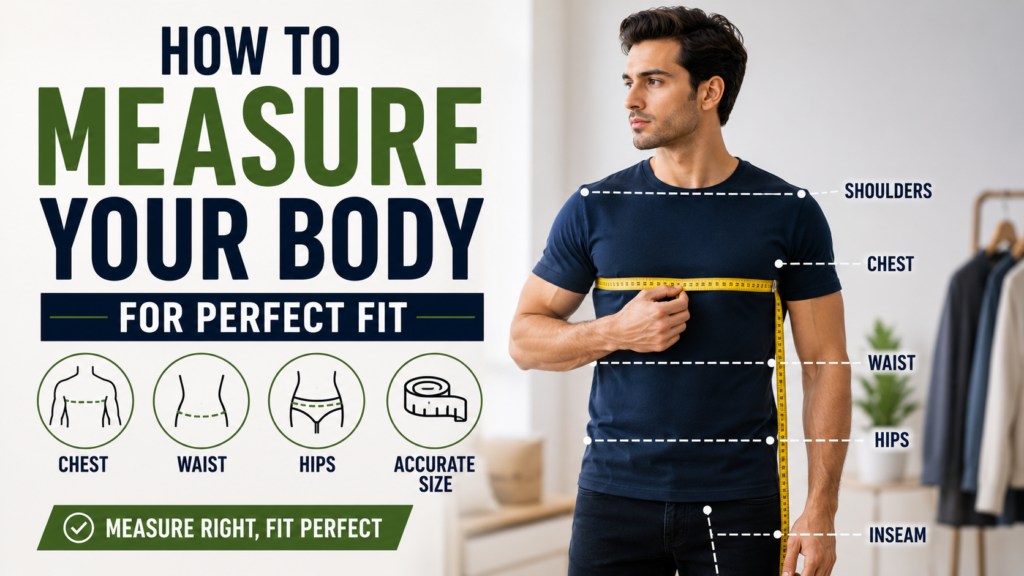
How to Measure Your Chest
Stand naturally with your arms relaxed.
Wrap the measuring tape around the fullest part of your chest while keeping it level across your back.
The tape should feel snug but not tight.
Avoid holding your breath while measuring.
How to Measure Your Shoulders
Measure from the outer edge of one shoulder to the outer edge of the other across your upper back.
Keeping the tape straight provides the most accurate result.
Shoulder measurements are especially useful when buying shirts, jackets, and blazers.
How to Measure Your Waist
Locate your natural waist, which is usually just above your hips and below your rib cage.
Wrap the tape around your waist without pulling it too tightly.
Stand comfortably and breathe normally while taking the measurement.
How to Measure Your Hips
Stand with your feet together.
Measure around the fullest part of your hips while keeping the tape parallel to the floor.
Hip measurements are important for jeans, trousers, shorts, and skirts.
How to Measure Sleeve Length
Start at the shoulder seam and measure down to your wrist.
Keep your arm slightly bent for a more natural measurement.
Sleeve length helps ensure shirts and jackets fit comfortably.
How to Measure Inseam
The inseam is measured from the top of the inner thigh to the bottom of the ankle.
If measuring yourself is difficult, use a pair of trousers or jeans that already fit well and measure the inside leg instead.
Read Article- How to Build a Capsule Wardrobe: Buy Less, Wear More
Body Measurement Reference Table
| Measurement | Where to Measure | Common Clothing |
|---|---|---|
| Chest | Fullest part of chest | T-Shirts, Shirts, Jackets |
| Shoulders | Shoulder edge to shoulder edge | Shirts, Jackets |
| Waist | Natural waistline | Jeans, Trousers |
| Hips | Fullest part of hips | Jeans, Shorts |
| Sleeve | Shoulder to wrist | Shirts, Hoodies |
| Inseam | Inner leg | Jeans, Trousers |
Tips for Accurate Measurements
To achieve the best results:
- Use a soft measuring tape.
- Stand naturally without sucking in your stomach.
- Measure twice for accuracy.
- Record measurements in inches or centimeters.
- Update your measurements every few months.
These small steps help improve sizing accuracy when shopping online.
Common Measurement Mistakes
Many people accidentally make these errors:
- Measuring over bulky clothing.
- Pulling the tape too tightly.
- Measuring the wrong waist position.
- Ignoring shoulder measurements.
- Using old body measurements.
Taking a few extra moments can make a significant difference.
How to Use Your Measurements
Once you know your body measurements:
- Open the product’s size chart.
- Compare your measurements with the chart.
- Read the fit description.
- Check customer reviews if available.
- Choose the size closest to your measurements.
Never assume that your usual clothing size will fit every brand the same way.
Frequently Asked Questions
Should I measure myself or my clothes?
Body measurements are the best starting point. You can also measure clothing that already fits well for comparison.
How often should I update my measurements?
Checking every three to six months is a good habit, especially if your weight or fitness routine changes.
Should I size up if I’m between two sizes?
That depends on the brand’s fit description and the type of clothing. Always review the size chart and consider the fabric before deciding.
Why do different brands have different sizes?
Each manufacturer follows its own sizing standards, which is why comparing measurements is more reliable than relying on size labels.
Can I measure myself without help?
Yes. Most measurements can be taken alone using a mirror, although shoulder measurements are often easier with assistance.
Final Thoughts
Accurate body measurements are one of the simplest ways to improve your online shopping experience. Instead of guessing your size, taking a few minutes to measure your chest, waist, hips, shoulders, sleeves, and inseam allows you to compare products with confidence.
Before placing your next clothing order, keep your measurements nearby and always review the brand’s size chart. This small habit can help you choose better-fitting clothes while reducing returns and unnecessary exchanges.