
Learn the difference between natural vs synthetic fabrics. Compare cotton, linen, wool, polyester, nylon, rayon, and more to choose the right fabric for comfort, durability, and everyday wear.
Natural vs Synthetic Fabrics: What’s the Difference and Which Should You Choose?
When shopping for clothes online, you’ve probably seen fabric names like cotton, linen, polyester, nylon, rayon, or acrylic. While they may look similar at first glance, these fabrics are made from different materials and behave differently in everyday use.
Some fabrics are valued for their breathability and softness, while others are designed to resist wrinkles, dry quickly, or last longer. Understanding the difference between natural and synthetic fabrics can help you choose clothing that matches your lifestyle, climate, and personal comfort.
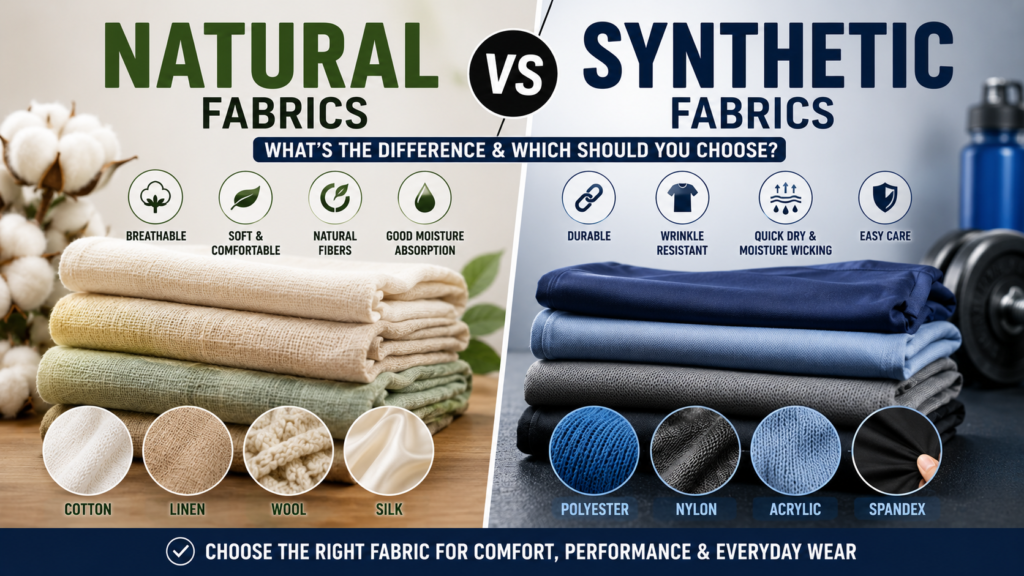
Instead of selecting garments based only on colour or design, knowing what the fabric is made from allows you to make smarter purchasing decisions that provide better long-term value.
Quick Answer
Natural fabrics are made from plant or animal fibres, while synthetic fabrics are manufactured using man-made materials. Natural fabrics generally offer better breathability and comfort, whereas synthetic fabrics often provide greater durability, wrinkle resistance, and moisture management.
What Are Natural Fabrics?
Natural fabrics come from plants or animals with minimal industrial processing. Some of the most common natural fabrics include: Source
- Cotton
- Linen
- Wool
- Silk
These fabrics have been used for centuries because they are comfortable, breathable, and suitable for a wide range of climates.
What Are Synthetic Fabrics?
Synthetic fabrics are manufactured using engineered fibres. Popular examples include:
- Polyester
- Nylon
- Acrylic
- Spandex (Elastane)
Modern synthetic fabrics are designed to improve durability, flexibility, moisture management, and wrinkle resistance. Source
Many sportswear brands rely heavily on synthetic materials because of these performance benefits.
Natural vs Synthetic Fabrics Comparison
| Feature | Natural Fabrics | Synthetic Fabrics |
|---|---|---|
| Source | Plants & Animals | Man-made fibres |
| Breathability | Excellent | Good |
| Comfort | Excellent | Very Good |
| Moisture Control | Good | Excellent (performance fabrics) |
| Durability | Good | Excellent |
| Wrinkle Resistance | Moderate | Excellent |
| Drying Speed | Moderate | Fast |
| Maintenance | Moderate | Easy |
| Environmental Impact | Often Lower* | Depends on material |
The environmental impact varies depending on farming methods, manufacturing processes, and recycling practices.
Cotton
Cotton is one of the world’s most widely used natural fibres.
Best For
- Everyday T-shirts
- Casual shirts
- Children’s clothing
- Summer wear
Advantages
- Soft
- Breathable
- Comfortable
- Easy to wash
Limitations
- May wrinkle
- Dries more slowly than polyester
Linen
Linen is made from flax fibres. It is known for:
- Excellent airflow
- Lightweight feel
- Fast drying
- Natural texture
Linen performs especially well during hot weather.
Wool
Wool naturally traps warmth while remaining breathable. Common uses include:
- Sweaters
- Coats
- Winter accessories
High-quality wool also helps regulate body temperature.
Polyester
Polyester remains one of the most popular synthetic fibres. Advantages include:
- Excellent durability
- Wrinkle resistance
- Quick drying
- Shape retention
It is commonly used in sportswear, uniforms, jackets, and travel clothing.
Nylon
Nylon is lightweight yet extremely strong. It is widely used for:
- Outdoor clothing
- Backpacks
- Jackets
- Performance apparel
Its abrasion resistance makes it suitable for garments that experience heavy use.
Spandex (Elastane)
Spandex is rarely used on its own. Instead, small amounts are blended with other fabrics to add stretch. You’ll often find elastane in:
- Jeans
- Activewear
- Leggings
- Compression clothing
Which Fabric Is Better for Summer?
For hot weather, breathable fabrics are usually the most comfortable. Excellent summer choices include:
- Cotton
- Linen
- Lightweight cotton blends
These fabrics allow better airflow and help maintain comfort during warm days.
Which Fabric Is Better for Sports?
Performance clothing often uses synthetic fibres because they:
- Dry quickly
- Resist wrinkles
- Wick moisture away from the skin
- Maintain shape after repeated washing
Many athletic garments combine polyester with elastane to improve flexibility.
Fabric Blends
Modern clothing often combines natural and synthetic fibres. Common examples include:
- Cotton + Polyester
- Cotton + Elastane
- Linen + Cotton
These blends aim to balance softness, durability, stretch, and easy maintenance.
Common Shopping Mistakes
Avoid these common errors:
- Assuming synthetic fabrics are always poor quality.
- Buying only by appearance.
- Ignoring fabric composition.
- Choosing heavy fabrics for hot climates.
- Skipping the care label.
Reading the product description carefully can help you make a better choice.
Expert Buying Tips
- Consider your local climate before selecting fabrics.
- Check the full fabric composition instead of only the main fibre.
- Compare GSM when available.
- Read care instructions before purchasing.
- Prioritise comfort over short-term fashion trends.
Read This – Baggy Jeans: The Complete Buying Guide (2026)
Frequently Asked Questions
Are natural fabrics always better?
Not necessarily. The best fabric depends on how you plan to use the garment. Natural fabrics excel in comfort, while synthetic fabrics often perform better during sports and travel.
Is polyester bad for the skin?
Most people wear polyester comfortably. However, individuals with very sensitive skin may prefer natural fibres such as cotton.
Which fabric lasts longer?
High-quality synthetic fabrics often resist wear better, although well-made natural fabrics can also last for many years with proper care.
Are blended fabrics a good choice?
Yes. Fabric blends combine the strengths of different fibres, offering a balance of comfort, durability, and flexibility.
Which fabric should I choose for everyday wear?
Cotton and cotton-rich blends remain excellent choices for daily clothing because they offer comfort, breathability, and easy maintenance.
Final Thoughts
Understanding the difference between natural and synthetic fabrics helps you become a more informed shopper. Instead of relying only on appearance or price, you can evaluate garments based on how they’ll perform in everyday life.
Whether you’re shopping for a lightweight summer T-shirt, a durable travel jacket, or comfortable everyday jeans, choosing the right fabric will improve comfort, extend the life of your clothing, and help you get better value from every purchase.
About SafeMeShop.com
At SafeMeShop.com, our goal is to provide reliable, easy-to-understand, and informative content about clothing, fashion, fabrics, sizing, and online shopping. Every article is created for educational and general knowledge purposes to help readers make smarter buying decisions with confidence. We strive to publish accurate and up-to-date information, but product specifications, prices, materials, and availability may vary depending on the brand or retailer. We encourage readers to verify product details before making any purchase. The content on SafeMeShop.com is intended as a helpful shopping guide and should not be considered professional or brand-specific advice. Our mission is to make online fashion shopping simpler, safer, and more informed for everyone.